


Physics
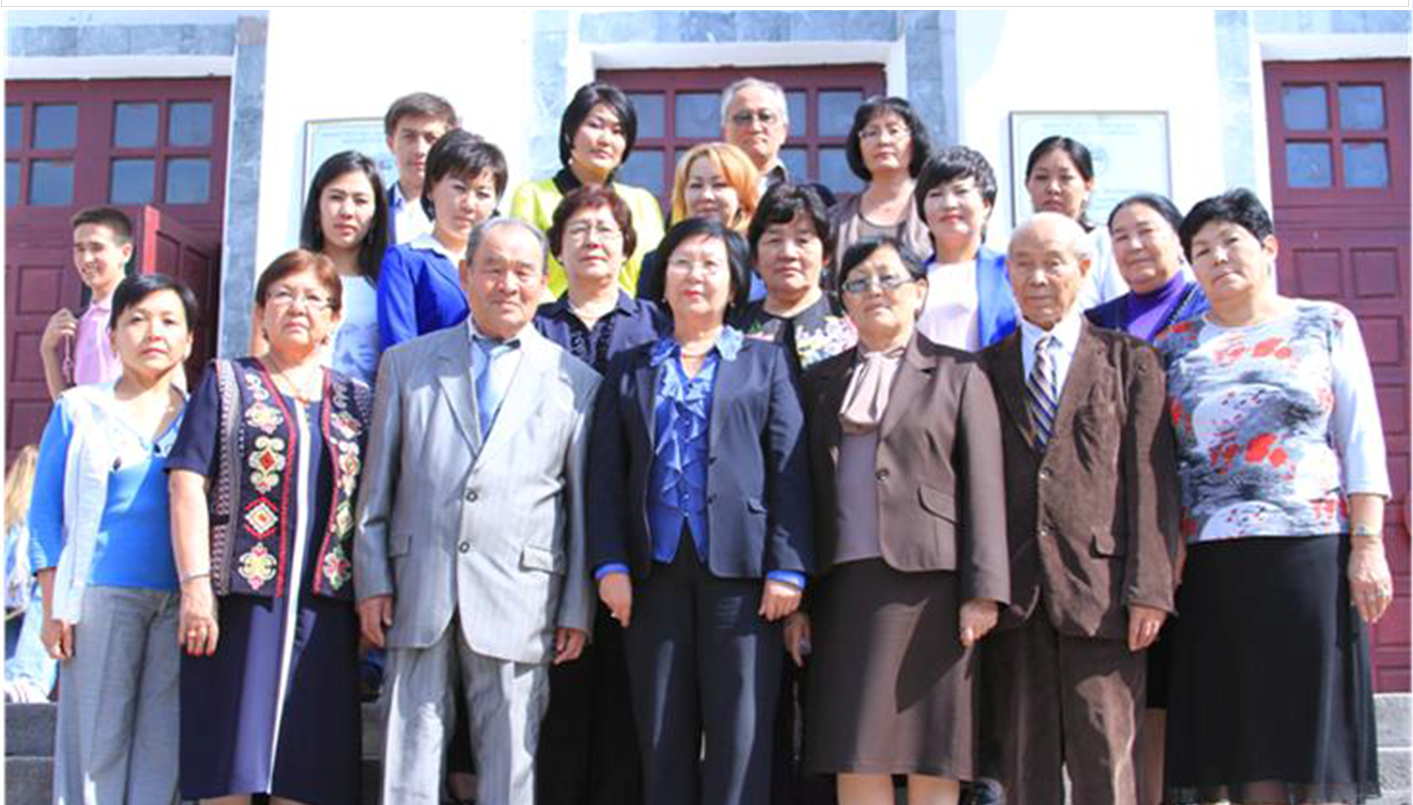
GENERAL CHARACTERISTICS OF THE DEPARTMENT OF PHYSICS
The Department of Physics was established in 1954 simultaneously with the founding of Frunze Polytechnic Institute and is one of the oldest departments at the university.
Mission of the Department – to provide fundamental physical training for a new generation of engineers capable of applying physical principles in high-technology industries.
Strategic Goal – to become a leading department in basic engineering education in the republic, integrated with scientific research.
The Department provides bachelor-level instruction in all academic programs of Kyrgyz State Technical University named after I. Razzakov and delivers courses across all institutes of the university: the Institute of Information Technologies, the Institute of Architecture and Design, the Kyrgyz Mining and Metallurgical Institute, the Kyrgyz Engineering and Construction Institute, the Kyrgyz-German Technical Institute, the Technological Institute, the Energy Institute, the Higher School of Economics and Business, as well as the Polytechnic College. Instruction is offered in both full-time and distance learning formats.
The Department is responsible for four academic disciplines: “Physics I,” “Physics II,” “Physics,” and “Concepts of Modern Natural Science (CMS).” Faculty members deliver lectures, practical classes, and laboratory sessions in all these courses.
The Department employs a highly qualified academic staff, including 8 faculty members holding academic degrees: 2 Doctors of Physical and Mathematical Sciences;2 Candidates of Technical Sciences;1 Candidate of Physical and Mathematical Sciences;1 Candidate of Biological Sciences;2 Candidates of Pedagogical Sciences.
The primary objective of the Department is to ensure high-quality student education, enhance the qualifications of faculty and support staff, and improve and maintain the material and methodological resources of the Department.
The Department is developing a state-funded scientific and methodological research project aimed at improving the educational process and implementing digitalization in teaching. This includes: modernization of curricula; transition from classical to engineering-oriented physics; implementation of e-learning methods; integration of case studies from electronics, photonics, materials science, and energy engineering; and the use of simulators and virtual laboratories.
An academic and methodological seminar operates within the Department, where faculty teaching materials and methodological developments are discussed. Each year, the faculty plans and publishes textbooks, teaching manuals, laboratory guidelines, independent study materials, and problem-solving guides in both Kyrgyz and Russian.
Virtual laboratory works have been developed, and laboratory stands have been upgraded. The Department currently operates six teaching laboratories and a computer classroom.


